

If you are comparing teeth whitening Gold Coast options, the first thing to know is that whitening is a chemical lightening process for natural tooth structure. It may reduce certain stains in enamel and dentine, but it does not change the colour of crowns, veneers, fillings or every type of discolouration.
For many people around Robina, Varsity Lakes, Burleigh Waters, Merrimac and nearby Gold Coast suburbs, the most useful question is not simply “Which whitening is strongest?” It is “Which option is appropriate for my teeth, gums, sensitivity level and existing dental work?” A dental assessment helps answer that before treatment is started.
How teeth whitening Gold Coast treatment works in practice
Most professional whitening systems use peroxide-based gels. The two common ingredients are hydrogen peroxide and carbamide peroxide. Carbamide peroxide breaks down into hydrogen peroxide over time, so it usually works more gradually.
These gels release oxygen molecules that interact with coloured compounds inside the tooth. In simple terms, larger stain molecules are broken into smaller, less visible particles. This can make natural teeth appear lighter, depending on the original tooth shade, the type of stain and how the enamel responds.
Whitening does not “paint” teeth white. It also should not be thought of as a substitute for oral health care. If there is decay, gum inflammation, cracked enamel or heavy build-up, your dentist may recommend treating those issues before whitening.
What whitening can and cannot change
A teeth whitening Gold Coast consultation should include a discussion about the likely cause of the discolouration. Some stains sit mostly on the surface of the teeth. Others are deeper within the tooth structure.
Surface stains may be associated with coffee, tea, red wine, smoking, some foods and normal ageing. Deeper discolouration can be linked to previous trauma, certain medicines, developmental enamel changes or older dental treatment.
Whitening may help lighten many natural teeth, but it has limits. It generally will not change:
- Porcelain veneers or crowns
- Composite bonding or tooth-coloured fillings
- Dentures or implant crowns
- Some grey, brown or internal stains
- Tooth shade differences caused by trauma or previous root canal treatment
If a front filling, crown or veneer already matches your current tooth shade, whitening the surrounding teeth may make that restoration look darker by comparison. This is why planning matters, particularly if whitening is being considered before other cosmetic dental work.
The Australian Dental Association’s patient resource on teeth whitening explains that whitening products can cause side effects such as tooth sensitivity and gum irritation, especially if used incorrectly or without appropriate advice.
The main whitening options available
Professional teeth whitening Gold Coast care may involve an in-chair appointment, dentist-supervised take-home trays or a combination approach, depending on your oral health, goals and the whitening system used.
In-chair whitening is performed in a dental setting. The gums and soft tissues are protected before gel is applied to the teeth. Some systems use a dental light as part of the process, although the whitening gel remains the main active component.
Take-home whitening usually involves custom trays made to fit over your teeth. Your dentist provides instructions on how much gel to use, when to wear the trays and how to manage sensitivity if it occurs.
Over-the-counter products, such as whitening strips or toothpastes, are widely available. They may be suitable for some mild surface staining, but they are not tailored to your bite, gum shape, existing restorations or sensitivity risk.
| Whitening option | How it is usually used | Things to consider |
|---|---|---|
| In-chair whitening | Applied by a dental professional during an appointment | May be considered when a supervised clinical setting is preferred |
| Take-home custom trays | Worn at home with dentist-supplied gel and instructions | Fit and instructions are important for reducing gum irritation |
| Whitening toothpaste | Used during normal brushing | Helps with some surface stains but does not change deep tooth colour in the same way peroxide gels can |
| Store-bought strips or gels | Applied at home without custom fitting | May not suit uneven teeth, sensitive teeth, gum concerns or existing dental work |
If you are deciding where whitening sits among other cosmetic options, this guide to where teeth whitening fits within cosmetic dentistry may help you compare it with treatments such as bonding or veneers.
What happens before whitening is recommended
Before teeth whitening Gold Coast treatment is considered, your dentist will usually check your teeth, gums and existing dental work. This is not just a formality. Whitening gel can irritate exposed dentine, leaking fillings, inflamed gums or cracks in teeth.
Your dentist may ask about sensitivity, previous whitening, oral hygiene, medical history and what you hope to change. They may also check whether any teeth look darker because of trauma, decay or internal changes, as these issues may need different care.
A dental clean may be suggested if plaque, calculus or surface staining is present. Cleaning does not bleach teeth, but it can remove build-up that may affect how whitening trays fit or how evenly teeth appear afterward. If you are unsure whether a clean is due, you can read more about when a dental clean is recommended.
What the appointment may involve
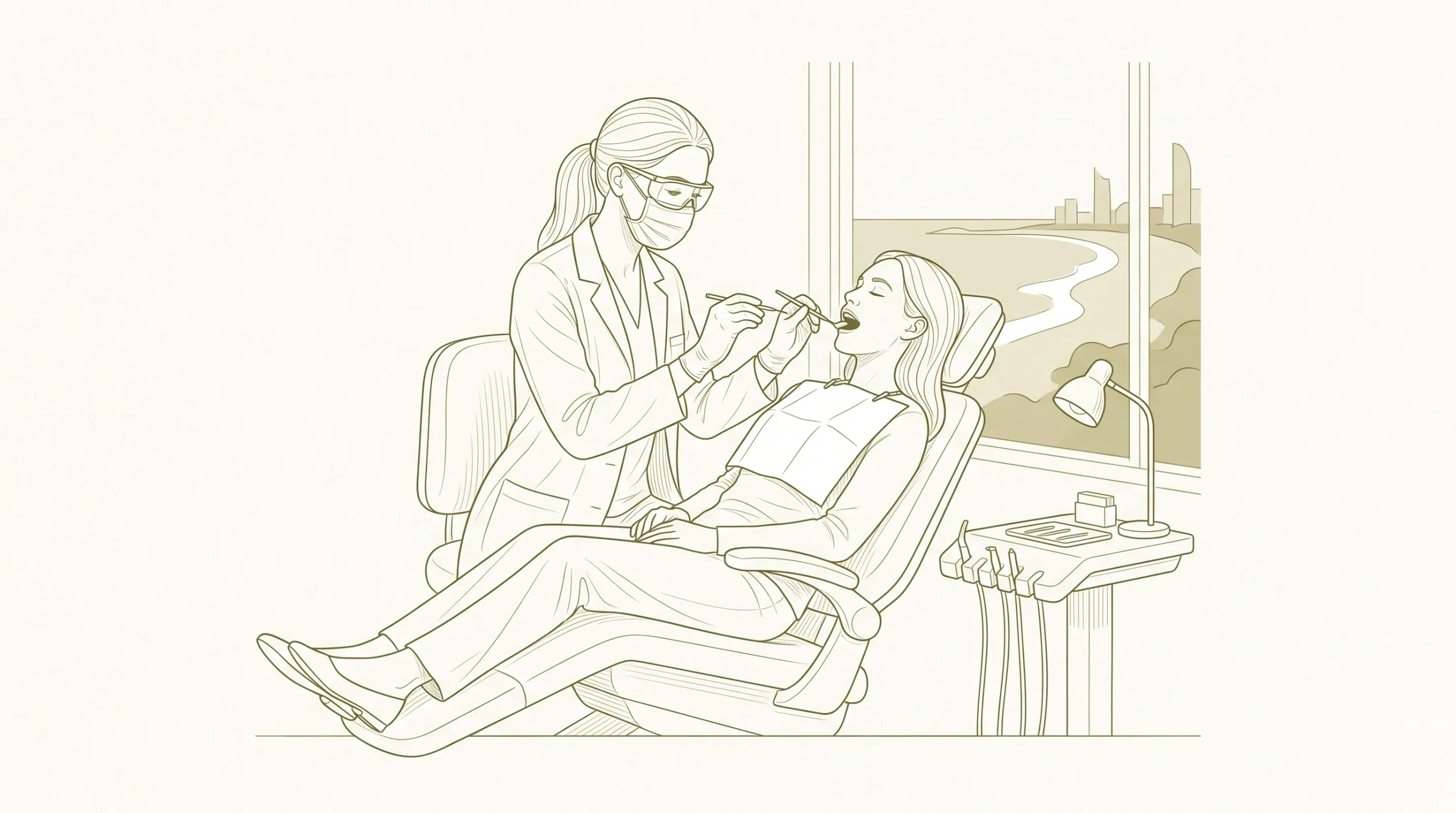
The exact process depends on the whitening method selected and the system used by the dental practice. In a general sense, an in-chair whitening appointment may involve recording your starting shade, protecting the gums and lips, applying whitening gel, monitoring the teeth and removing the gel after the recommended time.
For take-home trays, impressions or digital scans may be used to create trays that fit your teeth. Your dentist then explains how to load the trays, how long to wear them and what to do if sensitivity develops.
With any teeth whitening Gold Coast option, instructions matter. Using more gel than recommended, leaving trays in for longer than advised or repeating treatment too often can increase the chance of sensitivity and gum irritation without necessarily improving the outcome.
Sensitivity, risks and why supervision matters
Tooth sensitivity is one of the most common side effects of whitening. It may feel like a short, sharp sensation when teeth are exposed to cold air, cool drinks or brushing. For some people it is mild and temporary. For others it can be uncomfortable enough to pause or adjust treatment.
Possible risks and limitations include gum irritation, uneven whitening, temporary tooth sensitivity, dissatisfaction with shade change and colour mismatch with existing fillings, crowns or veneers. If whitening is used where decay, gum disease or cracks are present, symptoms may worsen.
A dentist can assess whether desensitising products, a different gel concentration, shorter wear time or delaying whitening may be more appropriate. People with a history of significant sensitivity, enamel defects, gum recession, pregnancy or breastfeeding may need a more cautious discussion. Elective whitening is often postponed during pregnancy or breastfeeding because the evidence base for cosmetic whitening in these situations is limited.
How long results may last
The length of a whitening result varies between patients. It can be influenced by the original tooth shade, the type of stain, oral hygiene, diet, smoking or vaping, medication use and whether touch-up whitening is appropriate later.
Some people notice gradual re-staining over time, particularly with regular coffee, tea, red wine or tobacco exposure. Brushing with fluoride toothpaste, cleaning between teeth, regular dental checks and professional cleaning when recommended may help maintain oral health and reduce surface staining.
A sensible goal for teeth whitening Gold Coast treatment is a natural-looking improvement that suits your teeth and circumstances, rather than trying to reach a fixed shade on a chart. Tooth colour varies widely between people, and very light shades may not be realistic or suitable for every mouth.
Costs, payment plans and financial questions
Whitening fees vary because the right option is not the same for every patient. Cost can be affected by whether you need a dental examination first, whether a clean is recommended, whether custom trays are made, the type of whitening system used and whether existing dental work needs to be reviewed.
For a deeper discussion of pricing factors, The Dental Lounge @ Robina has a separate article on what affects teeth whitening prices on the Gold Coast. That can be useful if you are comparing quotes and want to understand why fees may differ.
Some patients ask about payment plans or external finance for dental care. It is worth reading terms carefully, checking fees and considering whether treatment is necessary or elective before making a financial decision. As a general financial literacy example outside Australia, Swift Credit describes regulated lending information as a licensed money lender in Singapore, which highlights why clear fees and eligibility details should be reviewed before borrowing. This is not a recommendation for dental finance in Australia, and your dental team cannot provide personal financial advice.
Is whitening suitable for everyone?
Not every teeth whitening Gold Coast option is appropriate for every patient. Your dentist may suggest delaying whitening or considering a different treatment if there is active decay, gum disease, untreated sensitivity, cracked teeth, extensive restorations or discolouration that is unlikely to respond well.
Whitening may also be less predictable when teeth have strong internal staining or when front teeth are heavily restored. In these cases, your dentist may discuss alternatives such as replacing mismatched restorations, composite bonding or veneers, depending on your oral health and treatment goals.
The aim of an assessment is not to talk every patient into whitening. It is to work out whether whitening is likely to be suitable, what risks are relevant and whether another approach would better address the concern.
Questions to ask before choosing whitening
Before starting whitening, consider asking your dentist:
- What type of staining do my teeth appear to have?
- Are my teeth and gums healthy enough for whitening at the moment?
- Will my fillings, crowns or veneers look different after whitening?
- What sensitivity should I expect, and how can it be managed?
- How long should I use the product or trays?
- What are the alternatives if whitening is unlikely to achieve the change I want?
These questions are especially useful if you have had previous dental work on front teeth or if you are comparing several cosmetic options.
Frequently asked questions
Does teeth whitening damage enamel? Whitening products used appropriately under dental guidance are commonly used in dentistry, but misuse can increase the risk of sensitivity, gum irritation and other problems. A dentist can check whether your enamel, gums and restorations are suitable before recommending treatment.
How white will my teeth get? Shade change varies between patients. It depends on the starting shade, type of stain, enamel characteristics, age, oral health and the whitening method used. No ethical dental provider can guarantee a specific shade result.
Can whitening work on crowns, veneers or fillings? No. Whitening gel is designed for natural tooth structure and does not bleach porcelain, ceramic, composite resin or dentures. If restorations are visible when you smile, your dentist can explain how whitening may affect overall colour matching.
Is in-chair whitening better than take-home whitening? Neither option is automatically better for every person. In-chair whitening may suit patients who prefer treatment in a dental setting, while custom take-home trays may suit those who prefer a gradual approach. Suitability depends on your oral health, sensitivity risk and preferences.
Should I have a dental clean before whitening? A clean may be recommended if there is plaque, calculus or surface staining. Your dentist can advise whether it is needed after examining your teeth and gums.
Can I have whitening if I have sensitive teeth? Possibly, but it depends on the cause and severity of the sensitivity. Your dentist may recommend treating sensitivity first, changing the whitening plan or considering whether whitening should be delayed.
Discuss whitening with a Robina dental team
If you are thinking about whitening, a dental examination can help clarify what is causing the discolouration and whether whitening may be suitable for your circumstances. The Dental Lounge @ Robina can assess your teeth and gums, explain the potential benefits, limitations and risks, and discuss options in a way that supports an informed decision.
To discuss your concerns, you can book an appointment with the team at The Dental Lounge @ Robina in Robina on the Gold Coast.