
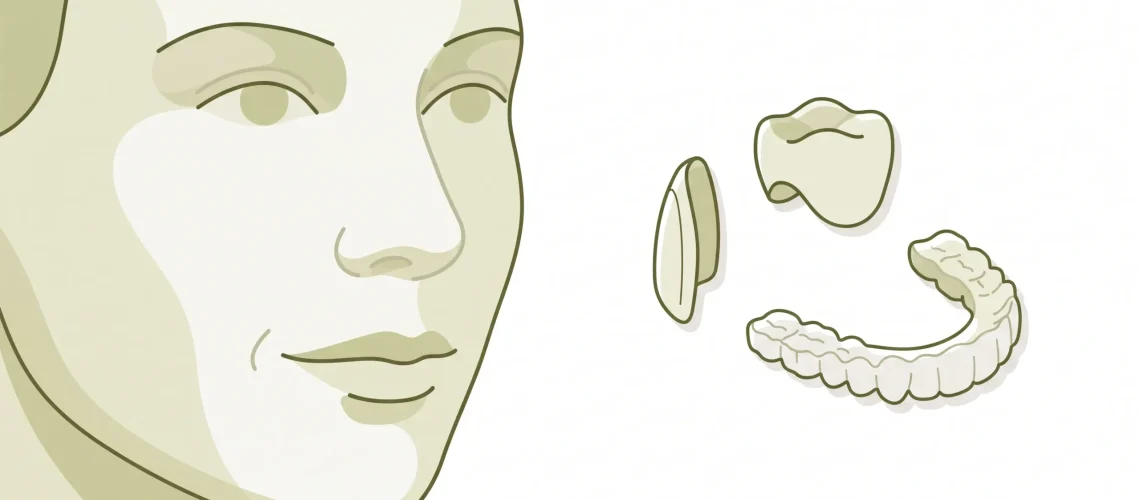
If you are comparing cosmetic dentistry options, the most useful starting point is not which treatment looks most appealing online. It is what you want to change, what your teeth and gums can safely support and how much ongoing care each option may need.
Cosmetic dentistry can include relatively simple treatments, such as teeth whitening, as well as more involved options, such as veneers, crowns or clear aligners. Each has different purposes, limits, costs, timeframes and maintenance needs. A dental examination is needed before any treatment can be recommended, because the most suitable option depends on your oral health, bite, medical history and personal goals.
A practical way to compare cosmetic dentistry options
A good comparison looks beyond appearance. It weighs up whether the treatment is appropriate for your mouth now and whether it is likely to remain manageable for you over time.
When comparing options, ask your dentist to explain:
- What concern the treatment is designed to address
- Whether any tooth structure needs to be changed or removed
- How the treatment may affect your bite, gums or existing dental work
- What maintenance or replacement may be needed later
- What risks, limitations and alternatives apply in your case
- What the total cost includes and whether staged care is possible
This approach helps you make a considered decision rather than choosing a treatment based only on photos, trends or another person’s experience. Treatment outcomes and experiences vary between patients, even when the same procedure is used.
Start with the concern you want to address
Cosmetic dentistry is a broad area. Different treatments solve different problems, so the first step is to name the specific concern as clearly as possible.
For example, teeth whitening may be discussed when the main issue is tooth colour, but it cannot change tooth shape or straighten crowded teeth. Veneers may alter the appearance of front teeth, but they are not suitable for every bite or every enamel condition. Clear aligners, including Invisalign treatment where appropriate, focus on tooth movement rather than tooth colour.
| Main concern | Options your dentist may discuss | Important consideration |
|---|---|---|
| Tooth colour | Whitening, replacing stained fillings, veneers in selected cases | Whitening does not change the colour of crowns, veneers or fillings |
| Small chips or uneven edges | Bonding, polishing, veneers in selected cases | Bonding can be conservative but may stain or chip over time |
| Gaps or mild shape concerns | Bonding, veneers, aligners depending on the cause | Spaces may reopen if the underlying cause is not managed |
| Crowding or tooth position | Clear aligners or other orthodontic options | Tooth movement requires assessment of gums, bone and bite |
| Worn or weakened teeth | Restorative treatment, crowns or other options | Function and tooth strength matter as much as appearance |
| Missing teeth | Bridge, denture or implant options where suitable | This is restorative care with cosmetic considerations |
If there is more than one concern, your dentist may suggest a sequence. For instance, gum health may need attention before whitening, or orthodontic movement may be considered before veneers to reduce the amount of tooth preparation needed.
Compare common cosmetic treatment choices side by side
The right choice is rarely just one treatment from a list. It is the option that fits your oral health, expectations, budget and willingness to maintain the result.
| Option | Often considered for | Possible advantages | Limitations to discuss |
|---|---|---|---|
| Teeth whitening | Staining or darker natural teeth | Does not usually involve reshaping the tooth | May cause sensitivity and does not whiten existing restorations |
| Dental bonding | Small chips, minor shape changes or small gaps | Can be more conservative than some alternatives | Resin can stain, wear or chip and may need repair |
| Veneers | Selected front tooth colour, shape or proportion concerns | Can alter the visible front surface of teeth | May involve enamel preparation and ongoing maintenance |
| Crowns | Teeth that are heavily restored, cracked, worn or weakened | Can protect and rebuild a compromised tooth | Usually involves more tooth reduction than veneers or bonding |
| Clear aligners | Mild to moderate tooth position concerns, depending on assessment | Moves teeth rather than covering them | Requires compliance and retainers after treatment |
| Tooth-coloured fillings | Visible old fillings or decay requiring restoration | Can restore tooth structure with a natural shade match | Suitability depends on remaining tooth structure and bite forces |
Teeth whitening is often one of the less invasive cosmetic options when the main issue is colour. It may be suitable for some people, but a dentist should check for decay, cracks, gum inflammation or existing restorations first. If you want more detail on where whitening sits compared with other treatments, this guide to where teeth whitening fits within cosmetic dentistry may be useful.
Veneers are different. A veneer is a thin facing placed on the front surface of a tooth, usually to change visible shape, shade or proportion. Porcelain and composite veneers have different preparation, repair and maintenance considerations. If veneers are on your shortlist, it is worth reading about what to know before considering veneers on the Gold Coast before your consultation.
Crowns sit in a different category again. They cover more of the tooth and are often considered when a tooth also needs strengthening or rebuilding. A crown may improve appearance, but it is not usually the most conservative option for a healthy tooth with only minor cosmetic concerns.
Look beyond appearance: health, function and stability
Cosmetic treatment should be planned around a healthy foundation. Teeth, gums, jaw joints, bite forces and existing dental work all influence what may be suitable.
A dentist may check for:
- Tooth decay or cracks
- Gum inflammation or gum disease
- Tooth wear from grinding or clenching
- Bite issues that place extra force on restorations
- The condition of old fillings, crowns or root canal treated teeth
- Medical history or medications that may affect dental care
This is why general dentistry and cosmetic dentistry often overlap. If a tooth is weak, decayed or under heavy bite pressure, improving appearance without addressing function may lead to avoidable complications. The article on how general and cosmetic dentistry work together explains this relationship in more detail.
For some patients, the first recommendation may be preventive or restorative care rather than cosmetic treatment. That is not a setback. It can be part of making sure any cosmetic work is based on stable oral health.
Ask how conservative each option is
In dentistry, a conservative approach generally means preserving as much healthy tooth structure as reasonably possible. This does not mean the least involved option is always the right one, but it should be part of the discussion.
| Treatment type | General level of tooth change | What to ask |
|---|---|---|
| Whitening | Usually no reshaping of teeth | Are my teeth and gums suitable for whitening? |
| Polishing or minor reshaping | Minimal adjustment in selected cases | How much enamel would be removed? |
| Bonding | Often minimal preparation, depending on the case | How long might the resin last in my bite? |
| Clear aligners | Moves teeth rather than covering them | Will my bite, gums and roots support movement? |
| Veneers | May involve enamel preparation | What are the alternatives if I want to preserve enamel? |
| Crowns | Usually more tooth reduction | Is a crown needed for strength or mainly appearance? |
A conservative option can still have limitations. Bonding, for example, may be suitable for a small chip but may not be strong enough for a heavily worn biting surface. Clear aligners may reduce the need for reshaping in some cases, but they require time, daily wear and retainer use afterward.
Think about maintenance and future dental work
Cosmetic dental treatments are not separate from everyday oral care. They need cleaning, monitoring and sometimes repair or replacement. The maintenance commitment should suit your lifestyle.
Whitening may need occasional top-ups depending on diet, habits and the whitening method used. Bonding may need polishing or repair if it stains or chips. Veneers and crowns need careful brushing, flossing and dental reviews, and they may need replacement later. Clear aligners require retainers after active tooth movement to help maintain tooth position.
It is reasonable to ask your dentist what may happen if a restoration chips, if your gums recede or if your bite changes over time. A treatment that looks straightforward at the beginning may involve future costs or replacement planning, so it is better to understand this before starting.
Compare costs by looking at what is included
Cosmetic dentistry costs vary because cases vary. The same treatment name can involve different materials, planning, laboratory work, appointment time and follow-up care.
Rather than comparing only the lowest starting price, ask for a written estimate that explains what is included. This may include the examination, X-rays if required, photos or scans, temporary restorations, laboratory fees, retainers, review appointments and maintenance items.
Also ask whether treatment can be staged. Some people choose to address oral health first, then whitening, then a small number of restorations where needed. Others may decide that a simpler option meets their needs. The Dental Lounge @ Robina has payment plans available, and the dental team can explain fees and payment options before treatment begins.
No dental team can assess cost accurately without looking at your teeth, gums and treatment goals. If a quote seems unusually simple for a complex concern, ask what has and has not been included.
Understand how planning tools and previews fit in
Modern cosmetic dentistry may involve photos, digital scans, shade matching, X-rays, smile design planning or trial mock-ups. These tools can help you understand proportions, tooth shape and possible treatment pathways, but they are planning aids rather than promises of a specific outcome.
Digital planning is also widely discussed in orthodontics. If you are curious about how this is presented outside Australia, this overview of digital orthodontic care and 3D planning shows the type of planning language patients may come across. For dental care in Australia, your own assessment should be completed by an appropriately registered dental practitioner who can consider your oral health and individual circumstances.
A preview can be useful if you are considering veneers, bonding or tooth movement. Still, the final result may be influenced by enamel thickness, gum levels, bite forces, tooth colour, material choice and how tissues respond. Ask your dentist to explain what is predictable, what is uncertain and what compromises may be involved.
Questions to ask before choosing a treatment
A helpful consultation gives you space to compare options without feeling rushed. You may want to bring notes or photos of what concerns you, but be cautious about using someone else’s result as a target. Teeth, facial proportions and oral health differ from person to person.
Useful questions include:
- What are the main causes of the concern I am noticing?
- Do I need any general dental care before cosmetic treatment?
- Which options are more conservative and which involve more tooth preparation?
- What are the risks and possible complications in my case?
- How might this treatment affect my bite or gums?
- How will existing fillings, crowns or veneers affect the plan?
- What maintenance, repairs or replacement may be needed later?
- What alternatives are available if I decide not to proceed now?
If you feel nervous about dental care, mention this early. Comfort measures and sedation options may be discussed where appropriate, but suitability depends on your medical history, the procedure and clinical assessment.
What a cosmetic consultation may involve in Robina
If you book a cosmetic consultation at The Dental Lounge @ Robina, the appointment may involve a discussion about your concerns, a review of your dental and medical history and an examination of your teeth, gums and bite. X-rays, photographs or scans may be recommended if they are needed for diagnosis or treatment planning.
Your dentist can then explain which options may be suitable, which options may be less appropriate and why. This should include potential benefits, risks, costs and alternatives, including the option of doing nothing for now if treatment is not necessary or you are undecided.
For patients from Robina, Varsity Lakes, Burleigh Waters, Merrimac, Mermaid Waters or Broadbeach Waters, a local consultation can also make ongoing reviews and maintenance easier to manage. Convenience is not the only factor, but it can matter when treatment involves multiple appointments or follow-up care.
When cosmetic treatment may need to wait
Sometimes the most appropriate advice is to delay cosmetic care until another issue is managed. This can happen if there is untreated decay, gum disease, infection, unstable tooth wear, jaw pain, heavy grinding or a medical factor that needs consideration.
Cosmetic treatment may also need extra planning if you have a history of dental trauma, root canal treatment, missing teeth, significant crowding or several older restorations. These factors do not automatically rule out cosmetic options, but they can change what is safe, realistic or maintainable.
If you have pain, swelling, bleeding gums, a broken tooth, a loose adult tooth or signs of infection, arrange a dental assessment promptly. Those symptoms should be assessed before focusing on cosmetic changes.
Frequently Asked Questions
What is the best cosmetic dentistry option? There is no single best option for everyone. The most suitable treatment depends on your concern, oral health, bite, budget, maintenance preferences and the risks or alternatives explained by your dentist.
Is whitening better than veneers? Whitening and veneers do different things. Whitening changes the shade of natural teeth, while veneers can change the visible front surface of selected teeth. Whitening may be more conservative, but it cannot change tooth shape or the colour of existing restorations.
Are cosmetic dental treatments permanent? Most cosmetic dental treatments require maintenance and may need repair or replacement over time. Longevity varies depending on the treatment, materials, oral hygiene, bite forces and individual habits.
Can Invisalign be part of cosmetic dentistry? Clear aligners, including Invisalign where suitable, may be considered when tooth position affects appearance or function. A dentist must assess your teeth, gums, bite and treatment goals before advising whether aligner treatment is appropriate.
Do I need a dental check-up before cosmetic treatment? Yes, an examination is important. Your dentist needs to check for decay, gum disease, cracks, tooth wear and other factors before discussing cosmetic options.
How should I compare cosmetic dentistry prices? Ask what is included in the fee, what may cost extra and what maintenance may be needed later. A lower initial price may not include the same planning, materials, appointments or follow-up care.
Discuss your options with a Robina dentist
Comparing cosmetic dentistry options is easier when you understand what each treatment can and cannot do. A dental examination can help determine whether your concern is mainly colour, shape, tooth position, tooth structure or a combination of factors.
To discuss your concerns, you can book an appointment with the team at The Dental Lounge @ Robina. Your dentist can assess your oral health and explain the potential benefits, risks, limitations and alternatives that may apply to your situation.