
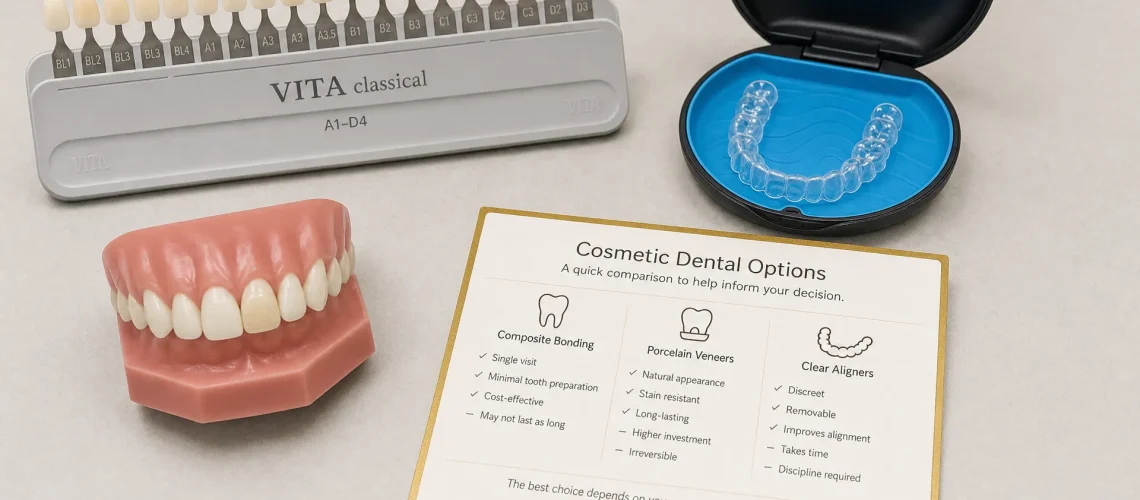
Choosing a cosmetic dental treatment can feel exciting, but it can also be surprisingly confusing. Whitening, veneers, bonding, Invisalign, crowns and tooth-coloured restorations can all improve a smile, yet they solve different problems and involve different levels of commitment.
The best option is not simply the one that looks the most dramatic in before-and-after photos. It is the treatment that fits your teeth, oral health, lifestyle, budget and long-term goals. A confident smile should still feel natural, function well and be easy to maintain.
This guide will help you understand how to compare cosmetic dental options before you book a consultation, so you can walk into your appointment with clearer expectations and better questions.
Start with what you want to change
Before comparing treatments, define the specific smile concern you want to improve. “I want a better smile” is a helpful starting point, but your dentist will usually need more detail to recommend the right path.
Common cosmetic concerns include:
- Stained or yellow teeth
- Chipped, worn or uneven tooth edges
- Small gaps between teeth
- Crooked or crowded teeth
- Old metal fillings that show when you smile
- Missing teeth
- Teeth that look too small, short or irregular
- A smile that feels unbalanced or asymmetrical
A useful exercise is to look at a recent photo of yourself smiling naturally and note what draws your eye first. Is it colour, shape, alignment, missing teeth or visible restorations? This helps separate treatments that improve tooth shade from those that change tooth position, structure or proportion.
It is also worth thinking about whether your concern is mainly cosmetic, functional or both. For example, a chipped front tooth may affect appearance, but it may also need structural protection. Crooked teeth may affect your smile, but they can also make cleaning more difficult or contribute to bite issues.
Make sure your oral health comes first
Cosmetic dentistry works best on a healthy foundation. If you have active tooth decay, gum disease, untreated tooth pain or bite problems, these should usually be addressed before purely aesthetic work begins.
This matters because cosmetic treatments can fail sooner if underlying issues are ignored. Whitening may cause discomfort if there are untreated cavities. Veneers or crowns may not be suitable until gum health is stable. Aligners may not be recommended until your dentist has assessed your bite, bone support and general oral condition.
According to the Australian Dental Association, regular dental check-ups are important for detecting oral health problems early and maintaining healthy teeth and gums. In a cosmetic consultation, your dentist will usually assess your teeth, gums, bite, existing restorations and any risks that could affect treatment success.
If you are feeling nervous about the dental visit itself, it may help to raise this early. The Dental Lounge Robina offers sedation options, and their guide for people with a fear of going to the dentist explains how anxious patients can be supported more comfortably.
Match the treatment to your main smile goal
Different cosmetic dental treatments are designed for different outcomes. Some are conservative and quick. Others involve a longer process but can create a more comprehensive change.
Here is a practical comparison of common options.
| Smile concern | Possible treatment options | Best suited for | Typical commitment level |
|---|---|---|---|
| Stained or discoloured teeth | Professional whitening | Healthy teeth with surface or age-related staining | Lower |
| Small chips or minor gaps | Composite bonding | Localised improvements to shape or edges | Lower to moderate |
| Old visible fillings | Tooth-coloured restorations | Replacing metal fillings or improving visible restorations | Moderate |
| Crooked or crowded teeth | Clear aligners or orthodontics | Improving tooth position and smile alignment | Moderate to higher |
| Severely worn, cracked or weakened teeth | Crowns or veneers, depending on the case | Structural and cosmetic improvement | Higher |
| Missing teeth | Implants, bridges or other replacement options | Restoring smile appearance and chewing function | Higher |
This table is a starting point only. Many people benefit from a combination of treatments, such as whitening before bonding, or orthodontic treatment before veneers. Sequencing matters because it can help preserve more natural tooth structure and create a more stable result.
If your concern is tooth colour
Professional teeth whitening is often the first cosmetic dental treatment people consider because it can brighten a smile without changing tooth shape. It may suit people with healthy teeth and gums who want a fresher, lighter appearance.
However, whitening does not work the same way on every type of discolouration. Yellow-toned staining often responds better than grey or internal discolouration. Existing fillings, crowns and veneers do not whiten like natural enamel, which means they may need to be replaced after whitening if they no longer match.
The Australian Dental Association’s information on whitening notes that whitening should be discussed with a dentist, especially because stronger whitening products can carry risks if used incorrectly or if dental problems are present.
Whitening may be a good fit if you want a noticeable but relatively conservative improvement. It may not be enough if your main concern is tooth shape, spacing, severe discolouration or old restorations that show when you smile.
If your concern is shape, chips or uneven edges
Composite bonding can often improve small chips, uneven edges, minor gaps and slight irregularities. The dentist applies tooth-coloured resin to reshape the tooth, then polishes it to blend with your smile.
Bonding is usually more conservative than porcelain veneers because it often requires little to no removal of natural tooth structure, depending on the case. It can be a good option for small improvements or for patients who want to test a more subtle change before considering longer-lasting restorations.
The trade-off is durability. Composite resin can stain or chip over time and may require maintenance. Porcelain options may last longer in suitable cases, but they usually involve more planning and a greater investment.
If old silver or metal fillings are affecting the appearance of your smile, you may also want to ask about replacing them with natural-looking restorations. The Dental Lounge Robina explains this option in its guide to tooth-coloured fillings, including how modern materials can help restorations blend more naturally with surrounding teeth.
If your concern is crooked teeth or gaps
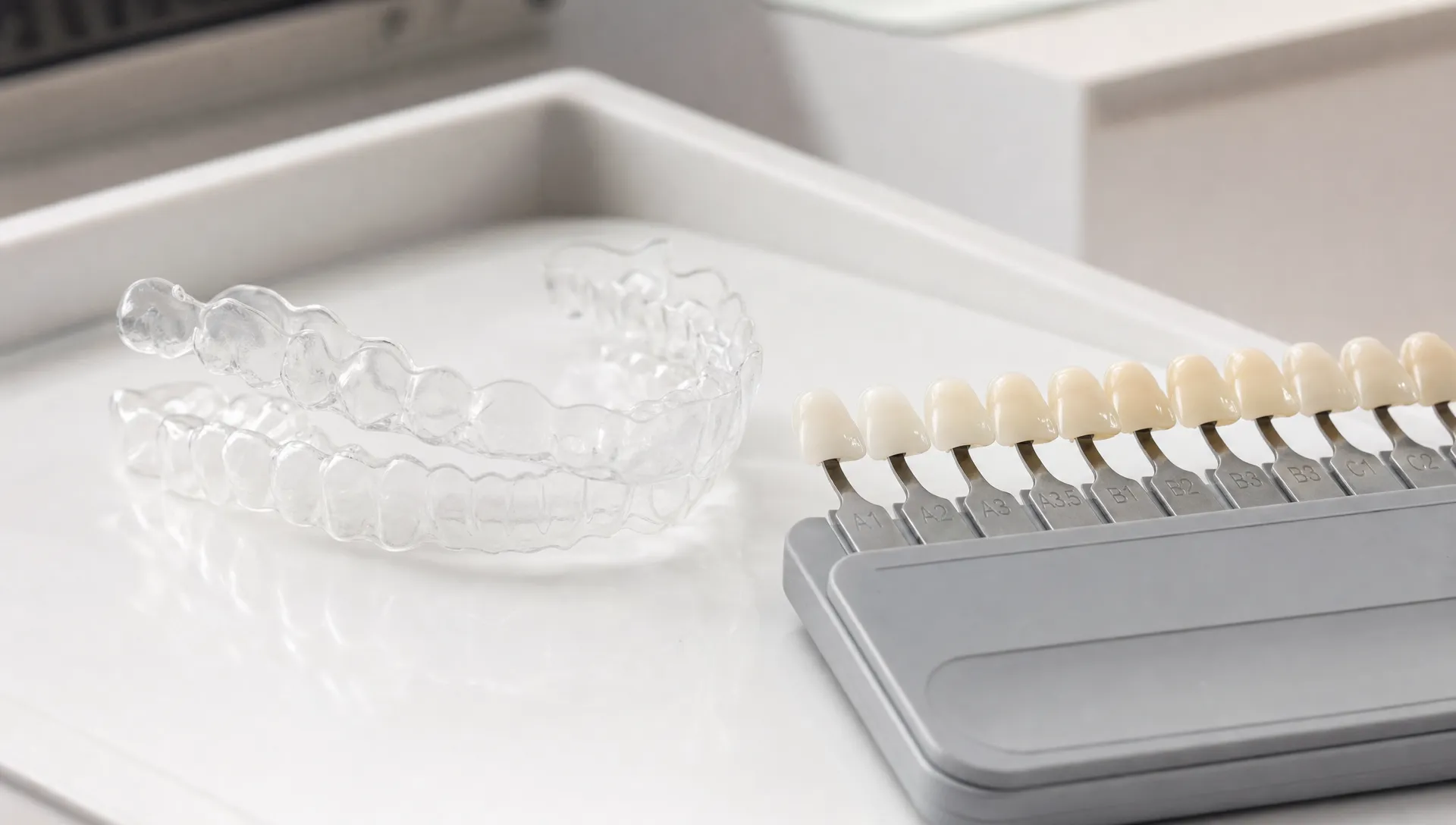
When tooth position is the main issue, orthodontic treatment may be more appropriate than covering the teeth with veneers or bonding. Clear aligners, such as Invisalign, can be suitable for many adults and teens who want a discreet way to improve alignment.
Straightening teeth can improve smile aesthetics, but it may also make teeth easier to clean and help create a more even bite. Treatment time varies depending on complexity, and success depends on wearing aligners as directed and attending review appointments.
If you are comparing cosmetic dental treatment options for alignment, ask whether moving the teeth first could reduce the need for more invasive cosmetic work later. For example, aligning crowded teeth may create a better foundation for whitening or minor bonding.
The clinic’s page on crooked teeth and Invisalign options is a helpful next step if your main concern is tooth position rather than colour or shape.
If your concern is missing teeth
A missing tooth can affect more than appearance. It can change the way you chew, alter how nearby teeth support each other and influence confidence when speaking or smiling.
Replacement options may include dental implants, bridges or other solutions depending on your oral health, bone support, budget and preferences. Each option has advantages and limitations. For example, an implant may provide a fixed replacement that does not rely on neighbouring teeth, while a bridge may be suitable in other circumstances.
The right choice depends on your full dental assessment. If this is your main concern, review the clinic’s guide to options for missing teeth and then discuss which approach is appropriate for your mouth.
Think about how natural you want the result to look
A good cosmetic result should suit your face, not just your teeth. Tooth colour, shape, length and symmetry all need to work with your lips, gums, complexion and facial proportions.
Some patients want a very bright, uniform smile. Others prefer a subtle improvement that friends and family notice without knowing exactly what changed. Neither goal is wrong, but it is important to communicate your preference clearly.
Bring reference photos to your consultation, but use them as a guide rather than a fixed template. A smile that looks ideal on someone else may not suit your tooth size, gum line or facial features. Your dentist can help you understand what is achievable while keeping your smile balanced and realistic.
It can also help to ask about shade selection. Many people assume “whiter is better,” but overly bright teeth can look artificial if they do not match the rest of the smile or face. A natural-looking cosmetic dental treatment often comes down to proportion, translucency and harmony, not just brightness.
Consider longevity and maintenance
Every cosmetic dental treatment requires maintenance. Even long-lasting restorations need good home care and regular dental visits.
Whitening results can fade over time, especially with coffee, tea, red wine, smoking or highly pigmented foods. Bonding may need polishing or repair. Veneers and crowns require careful cleaning around the gumline. Aligners often require retainers after treatment to help maintain the result.
Before choosing a treatment, ask your dentist:
- How long is this option expected to last in my case?
- What maintenance will I need at home?
- Will I need a mouthguard if I grind my teeth?
- Could this treatment need repair or replacement later?
- Are there more conservative options I should consider first?
These questions help you compare the true lifetime commitment, not just the initial appointment or upfront cost.
Balance budget, payment options and value
Cost is an important part of choosing cosmetic dental care, but the cheapest treatment is not always the best value. A treatment that does not address the real problem may need to be redone sooner, while a more comprehensive plan may deliver a better long-term outcome.
That said, cosmetic dentistry should still be planned in a way that feels manageable. Ask for a written treatment plan, including the sequence of appointments and any alternatives. If you are considering multiple improvements, your dentist may be able to stage treatment over time.
The Dental Lounge Robina offers payment plans and specials, which may help patients plan care in a more accessible way. During your consultation, ask what options are currently available and whether your preferred treatment can be phased.
Understand the level of tooth preparation involved
One of the most important differences between cosmetic options is how much natural tooth structure is changed.
Whitening and orthodontics generally do not remove tooth structure. Bonding may involve minimal preparation. Veneers and crowns can require reshaping of the tooth, depending on the material and clinical situation. Once tooth structure is removed, that step cannot be reversed.
This does not mean veneers or crowns are bad options. They can be excellent when teeth are worn, cracked, heavily restored or significantly discoloured. But if your teeth are healthy and your concern is mild, it is worth asking whether a more conservative treatment could achieve your goal.
A good cosmetic consultation should include a discussion of benefits, risks, alternatives and what happens if you choose to do nothing for now.
Look at your lifestyle honestly
The right cosmetic dental treatment should fit your daily habits. If you drink several coffees a day and do not want to change that, whitening may need more frequent maintenance. If you play contact sport, you may need extra protection for restorations. If you clench or grind your teeth, your dentist may recommend a nightguard to protect bonding, veneers or crowns.
Orthodontic treatment also requires lifestyle commitment. Clear aligners are removable, but they only work when worn as prescribed. If you think you might forget to wear them, fixed orthodontic options may need to be discussed.
Be honest with your dentist about your habits. This is not about judgement. It helps them recommend a cosmetic dental treatment that is more likely to last in your real life, not just in ideal conditions.
Know when a smile makeover may be appropriate
Sometimes one treatment is enough. In other cases, a smile makeover approach may be more suitable. This simply means combining treatments in a planned sequence to improve colour, alignment, shape and function together.
For example, a patient may straighten teeth first, whiten them next, then replace old visible fillings or repair chipped edges. Another patient may need to replace missing teeth before refining the appearance of surrounding teeth.
A staged approach can often be more conservative and predictable than trying to fix every concern with one treatment type. It also allows you to spread decisions over time and reassess your goals as your smile improves.
What to expect at a cosmetic dental consultation
A cosmetic consultation is your opportunity to understand what is possible and what is appropriate for your mouth. While every appointment is different, it may include a discussion of your goals, an examination of your teeth and gums, photographs, X-rays if needed and a personalised treatment plan.
To get the most from your appointment, prepare a short list of priorities. For example, you might say, “I want my front teeth to look straighter, but I do not want anything too bright,” or “I want to replace old fillings and improve the colour of my teeth before a wedding.”
You should leave with a clearer understanding of your options, the likely sequence, estimated timeframes, maintenance needs and any risks or limitations. If anything feels unclear, ask for clarification before committing.
Frequently Asked Questions
What is the best cosmetic dental treatment? The best treatment depends on your concern, oral health and goals. Whitening may suit discolouration, aligners may suit crooked teeth, bonding may suit small chips, and veneers or crowns may suit more significant shape or structural concerns.
Should I whiten my teeth before getting bonding or veneers? Often, yes. Because restorations do not whiten like natural teeth, many dentists recommend whitening first, then matching bonding, veneers or crowns to the new shade if whitening is part of your plan.
Is cosmetic dental treatment painful? Many cosmetic treatments are designed to be comfortable, and local anaesthetic or sedation options may be available depending on the procedure and your needs. Tell your dentist if you feel anxious so they can discuss comfort options.
How long does cosmetic dentistry last? Longevity varies by treatment, material, oral hygiene, diet, bite forces and maintenance. Whitening may need top-ups, bonding may require repairs, and porcelain restorations can last longer in suitable cases with good care.
Can I combine Invisalign with other cosmetic treatments? Yes, in many cases. Some patients straighten their teeth first, then whiten or refine tooth shape afterwards. Your dentist can advise whether this sequence is suitable for your smile.
Choosing the option that truly suits you
The right cosmetic dental treatment should improve your smile while respecting your oral health, lifestyle and long-term comfort. Start by identifying your main concern, then ask your dentist which option solves that problem with the least unnecessary intervention.
If you are ready to explore your choices, The Dental Lounge Robina can help you compare cosmetic, orthodontic and restorative options in a comfortable, modern setting. Book an appointment to discuss what is possible for your smile and which treatment pathway suits you best.