
Tooth pain or a damaged tooth is not something you need to “watch and worry” about for weeks. If you have searched for “dentist robina” because a tooth is throbbing, cracked, sensitive or injured, the safest next step is to arrange a dental assessment rather than trying to diagnose it at home. Some issues are minor, but others can worsen if infection, nerve irritation or deeper cracks are involved.
Seek prompt dental advice if pain is severe, swelling is present, a tooth has been knocked, a filling or crown has broken, or symptoms are affecting eating, sleeping or daily activities. If you have trouble breathing or swallowing, rapidly spreading facial swelling, uncontrolled bleeding or a serious facial injury, seek emergency medical care through 000 or a hospital emergency department.
When a “dentist robina” search should become a booking
Not every toothache needs the same response, but some signs are worth checking sooner rather than later. Tooth pain can come from decay, gum inflammation, a cracked tooth, a dental abscess, a wisdom tooth problem, grinding or trauma. A dentist can assess the tooth, gums, bite and surrounding tissues before explaining which options may be appropriate.
| Symptom or situation | What it may suggest | When to seek advice |
|---|---|---|
| Severe, constant or throbbing tooth pain | Nerve irritation, deep decay, infection or trauma | Promptly, especially if it affects sleep or eating |
| Swelling in the gum, jaw or face | Possible infection or abscess | Same day dental advice where possible, emergency medical care if swelling affects breathing or swallowing |
| Broken, cracked or chipped tooth | Loss of tooth structure or a deeper crack | As soon as practical, sooner if there is pain or sharp edges |
| Knocked-out adult tooth | Dental trauma | Urgent dental care, ideally immediately |
| Lost filling, crown or bridge | Exposed tooth structure or a weakened restoration | Prompt dental assessment to reduce further damage |
| Pain near the back of the mouth | Wisdom tooth irritation, infection or gum inflammation | Book an assessment, especially if swelling, bad taste or limited opening occurs |
| Sensitivity that lingers after hot, cold or sweet foods | Enamel wear, decay, gum recession or nerve inflammation | If it persists, worsens or is localised to one tooth |
If your dentist robina search started after a fall, sporting impact or sudden crack while chewing, mention this when booking so the clinic can advise an appropriate appointment type.
Tooth pain that should be checked, even if it comes and goes
Tooth pain that settles and returns can still indicate an underlying issue. A tooth may feel normal between episodes if the nerve is irritated only by pressure, cold, heat or chewing. This is one reason waiting for pain to become constant is not always a reliable guide.
Healthdirect explains that toothache can have several causes, including decay, injury, infection and problems with wisdom teeth. It also notes that dental treatment depends on the cause, which is why a proper examination matters.
For someone weighing up a dentist robina appointment, a useful rule is to seek advice when pain lasts longer than 24 to 48 hours, keeps returning, is getting worse, or is linked with swelling, fever, a bad taste, a pimple-like bump on the gum or pain when biting.
Pain can also be referred, which means it may feel as though it comes from one tooth when the cause is elsewhere. Sinus pressure, jaw joint problems and clenching can all confuse the picture. Your dentist may ask detailed questions about timing, triggers and the type of pain to narrow down the likely cause.
Tooth damage: when chips, cracks or lost fillings need dental care
A chipped tooth is not always an emergency, but it should not be ignored if it is sharp, painful, sensitive or affecting your bite. Even a small chip can irritate the tongue or cheek. A deeper crack may extend below the surface where it cannot be seen clearly at home.
Lost fillings and broken crowns can expose the inner parts of a tooth to temperature changes, food packing and further fracture. If you are unsure whether a tooth needs repair, The Dental Lounge @ Robina has a separate guide on when a dental restoration may be needed for a damaged tooth.
A dentist robina assessment can help determine whether the tooth may be monitored, smoothed, restored with a filling, protected with a crown, treated with root canal therapy or, in some situations, removed. Suitability depends on the amount of remaining tooth structure, symptoms, X-ray findings, gum health, medical history and your individual preferences.
What to do before your dental appointment
Home care cannot replace diagnosis, but it may reduce further irritation until you can be assessed. Keep the area clean and avoid chewing on the affected side if biting causes pain. If there is swelling, a cold compress on the outside of the face may feel more comfortable.
Practical steps may include:
- Rinse gently with warm salt water if the gum feels irritated, unless you have been told to avoid this.
- Take over-the-counter pain relief only if it is suitable for you, following the packet instructions or pharmacist advice.
- Do not place aspirin directly on the tooth or gum, as it can burn the soft tissues.
- Keep any broken tooth fragment, crown or filling and bring it to the appointment if you still have it.
- If an adult tooth is knocked out, hold it by the crown, not the root, and seek urgent dental care. If it cannot be placed back in the socket, keep it moist in milk or saliva.
- Do not reinsert a knocked-out baby tooth, as this can affect the developing adult tooth underneath.
- Avoid very hot, cold, hard or sticky foods if they trigger pain.
What a Robina dental assessment may involve
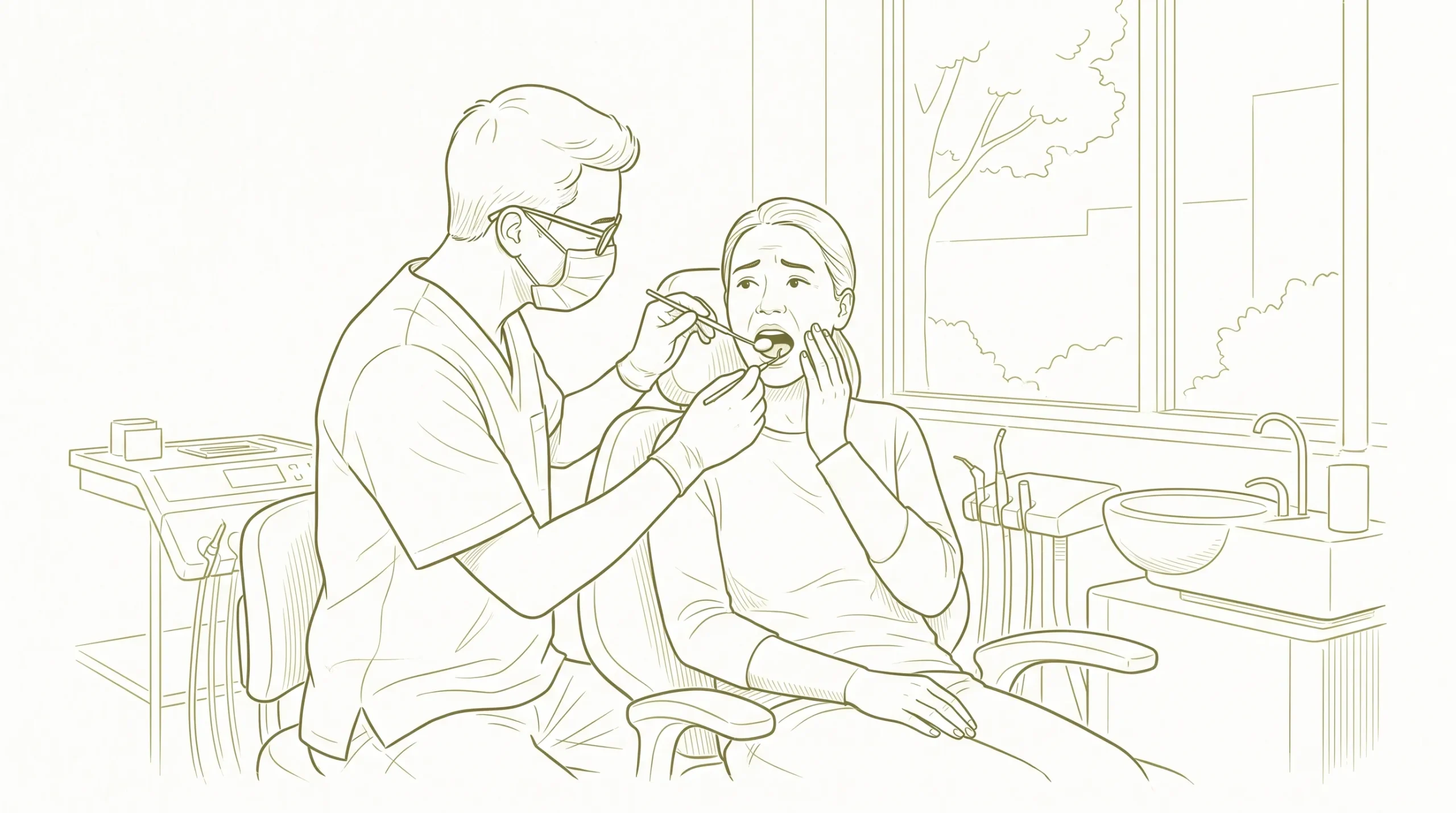
A dental visit for tooth pain or damage usually starts with a discussion about your symptoms. Your dentist may ask when the pain began, whether it is sharp or dull, what triggers it, whether swelling has occurred and whether the tooth has had previous dental work.
Examination and X-rays
The examination may include checking the affected tooth, neighbouring teeth, gums, bite and jaw movement. Your dentist may gently tap the tooth, test sensitivity or ask you to bite on a small instrument to check for cracks. Dental X-rays may be recommended when the cause is not visible or when the dentist needs to assess the tooth root, bone levels or signs of infection.
X-rays do not show every type of crack, and some conditions require ongoing review. Your dentist should explain why an X-ray is recommended and how the findings affect your options.
Relief, stabilisation and treatment planning
If the tooth is damaged, the first appointment may focus on relieving discomfort, protecting exposed tooth structure or preventing further breakage. A temporary restoration may sometimes be used before a longer term option is planned.
If infection is suspected, treatment will depend on the source and severity. Healthdirect notes that a dental abscess is a collection of pus caused by infection, and professional dental treatment is usually needed to manage the cause. Antibiotics may be considered in some situations, but they do not replace dental treatment when the tooth itself is the source.
A dentist robina appointment for tooth pain is usually about understanding the cause first, not jumping straight to a procedure.
Treatment options may vary between patients
After an assessment, your dentist may explain several possible options. The appropriate choice depends on clinical findings, how much tooth structure remains, gum and bone health, your medical history, your goals and the likely benefits, risks and limitations.
| Possible finding | Options your dentist may discuss | Key limitations to understand |
|---|---|---|
| Small chip with no deeper crack | Smoothing, bonding or a filling | Restorations can wear, chip or stain over time |
| Larger fracture | Filling, crown or other protective restoration | Not all teeth have enough structure for every option |
| Deep decay or nerve involvement | Root canal treatment or extraction | Recovery, cost, number of visits and long term outlook vary |
| Lost filling or crown | Replacement, repair or alternative restoration | The tooth underneath must be assessed first |
| Wisdom tooth inflammation | Cleaning, monitoring, medication where appropriate or removal | Removal is not suitable or necessary for every patient |
| Tooth knocked or loosened by trauma | Stabilisation, monitoring, root canal treatment or other care | Trauma outcomes can be unpredictable and may need review |
All dental procedures carry potential benefits and risks. These may include sensitivity, discomfort after treatment, restoration failure, the need for further treatment or changes in the expected outcome once the tooth is examined more closely. Your dentist should give you time to ask questions and consider alternatives before proceeding, unless urgent care is needed to manage infection, bleeding or trauma.
When symptoms involve wisdom teeth, jaw pain or dental anxiety
Pain near the back of the mouth can be difficult to interpret. Wisdom teeth may cause gum inflammation, pressure, swelling, bad taste or difficulty opening the mouth, especially if there is not enough room for them to come through properly. If this sounds familiar, you may find it useful to read more about wisdom tooth pain and possible causes.
Jaw pain can also feel like toothache. Clenching, grinding, jaw joint strain and the way teeth meet when biting can all contribute to discomfort. A dental assessment can help identify whether the pain appears to be tooth related, jaw related or due to another factor that may need medical review.
If your dentist robina search is partly driven by nervousness about what treatment might involve, tell the clinic when booking. Dental anxiety is common, and appointment pacing, clear explanations and suitable comfort measures can be discussed. The Dental Lounge @ Robina also provides information for people with a fear of going to the dentist, although that page URL should be checked if it does not load correctly.
Finding care close to home on the Gold Coast
For Gold Coast residents, a “dentist robina” search often means finding a clinic close enough for assessment, follow-up and any staged treatment that may be needed. This can be practical if you live, work or study around Robina, Varsity Lakes, Merrimac, Burleigh Waters, Mermaid Waters or Broadbeach Waters.
When booking for pain or damage, it is reasonable to ask what the first appointment is likely to involve, whether X-rays may be needed, who will explain treatment options, and how costs are estimated before treatment starts. If you have a medical condition, take regular medicines, are pregnant or have had previous dental complications, mention this early so the team can factor it into your care.
The Dental Lounge @ Robina offers general dentistry, cosmetic dentistry, oral surgery, orthodontics, Invisalign treatment, sedation options, preventive care, payment plans and appointment booking. Not every service is suitable for every situation, and your dentist can explain which options may be relevant after examining your teeth and gums.
Frequently asked questions
How quickly should I see a dentist for tooth pain? Seek prompt dental advice if the pain is severe, persistent, worsening, linked with swelling, caused by injury or affecting sleep or eating. Mild sensitivity that settles quickly may not need urgent care, but it should be checked if it keeps returning or is localised to one tooth.
Can a broken tooth wait if it does not hurt? Sometimes a minor chip can wait for a routine appointment, but a crack, sharp edge, lost filling or broken crown should be assessed. Pain is not the only sign of damage, and deeper cracks may not be obvious at home.
What if my tooth pain suddenly stops? Pain stopping does not always mean the problem has resolved. In some cases, nerve symptoms can change as a condition progresses. A dental examination can help determine whether treatment or monitoring is needed.
Should I go to hospital or a dental clinic? A dental clinic is usually the right place for toothache, cracked teeth, lost fillings and many dental injuries. Go to hospital or call 000 if there is trouble breathing or swallowing, rapidly spreading swelling, uncontrolled bleeding or a serious facial injury.
Will I need an X-ray for tooth pain? Not always. Your dentist may recommend an X-ray if the cause is not visible, if a crack, abscess or deep decay is suspected, or if treatment planning requires more information about the tooth roots and surrounding bone.
Can I ask about costs before treatment starts? Yes. After assessment, your dentist can explain the likely options, what each involves and any known costs or stages. Exact costs may depend on what is found during the examination and whether further treatment is required.
Arrange an assessment in Robina
If your dentist robina search is about current tooth pain, a broken tooth or a concern that has changed, you can contact The Dental Lounge @ Robina to arrange an assessment. A dental examination can help determine the cause of your symptoms and which options may be appropriate for your circumstances.
This article provides general information only and is not a diagnosis. Your dentist can assess your oral health, discuss potential benefits and risks, and explain alternatives before you decide on treatment.