

Choosing a dental care centre is not only about finding the closest clinic. For many people in Robina and the wider Gold Coast, the right choice comes down to feeling listened to, understanding your options and knowing that any recommended treatment is based on your oral health, goals, medical history and budget.
A clinic may look polished online, but the details that matter are often practical: how the team explains findings, whether preventive care is prioritised, what services are available and how clearly fees, risks and alternatives are discussed. This guide outlines what to look for before booking, especially if you are considering general, cosmetic, orthodontic, oral surgery or sedation dentistry.
What a dental care centre should provide before recommending treatment
A clinic should begin with assessment, not assumptions. Before a dentist suggests a filling, crown, whitening, clear aligners or extraction, they generally need to understand your dental history, current symptoms, oral hygiene habits, medical background and any concerns you have about treatment.
This matters because the same visible concern can have different causes. A chipped tooth, for example, may be related to trauma, grinding, decay, bite forces or an old restoration. Cosmetic concerns may also involve gum health, tooth wear, crowding or existing dental work. Treatment planning is more reliable when the underlying cause is considered.
A helpful first appointment may include a discussion of your concerns, an examination of your teeth and gums, dental X-rays if clinically appropriate and an explanation of what has been found. You should have the opportunity to ask questions before deciding what to do next.
If you are comparing clinics, it may also help to understand what dental services are commonly offered at a clinic so you can match your needs with the care available.
Look for a preventive approach, not just treatment when something goes wrong
Good dental care is not limited to fixing teeth after symptoms appear. Prevention can include regular examinations, professional cleans, fluoride advice, gum health checks, dietary guidance, mouthguard discussions and early identification of dental concerns.
A dental care centre that focuses on prevention should explain what you can do at home as well as what may need to happen in the clinic. This may include brushing technique, cleaning between teeth, managing dry mouth, reducing frequent sugar exposure or monitoring early enamel changes rather than treating too early.
Preventive care is especially useful for people who have ongoing risks, such as a history of decay, gum disease, acid erosion, teeth grinding, diabetes, smoking, pregnancy-related oral changes or a dry mouth linked to medication. The aim is not to create unnecessary appointments, but to tailor review intervals and advice to your individual risk.
Check that communication is clear and balanced
Clear communication is one of the most important signs of a well-run clinic. You should not feel rushed into treatment or left with a list of unexplained procedures. A dentist should be able to describe what they have found in everyday language and explain why a treatment may be recommended.
The dental care centre you choose should also discuss reasonable alternatives. In dentistry, options might include monitoring, preventive measures, repair, replacement, orthodontic treatment, cosmetic treatment or referral when care is outside the clinic's scope. Sometimes doing nothing immediately is also a valid option, provided you understand the risks of waiting.
Balanced communication includes possible benefits, limitations and risks. For example, whitening may lighten natural tooth enamel but does not whiten crowns, veneers or fillings in the same way. Clear aligners may be suitable for some orthodontic concerns but not all bite issues. A filling may restore a damaged area, but its longevity depends on factors such as tooth structure, bite forces, oral hygiene and diet.
Consider the range of services and when referral may be needed
A broader range of services can be convenient, particularly if you want routine care and may also need cosmetic dentistry, orthodontics, oral surgery or sedation options. The Dental Lounge @ Robina offers general dentistry, cosmetic dentistry, oral surgery, orthodontics, Invisalign treatment and sedation options, along with appointment booking, payment plans and special offers.
However, a clinic does not need to provide every possible treatment onsite to be a good fit. What matters is whether the team can explain what they do provide, when a referral may be appropriate and how your care will be coordinated if another practitioner is involved.
If you are interested in both everyday dental care and appearance-related treatment, this guide on how to choose a dental studio for routine and cosmetic care may help you compare priorities without focusing on cosmetic treatment alone.
| What to assess | Why it matters | Useful question to ask |
|---|---|---|
| Preventive care | Helps manage risk before problems become more complex | How will you assess my risk of future dental problems? |
| Treatment options | Supports informed decision-making | What are the alternatives, including monitoring? |
| Fees and planning | Helps you understand likely costs before proceeding | Can I have an itemised plan before treatment starts? |
| Comfort options | May assist nervous patients or people with complex needs | What options are available if I feel anxious? |
| Referral process | Ensures care is appropriate for the situation | When would you recommend referral to another provider? |
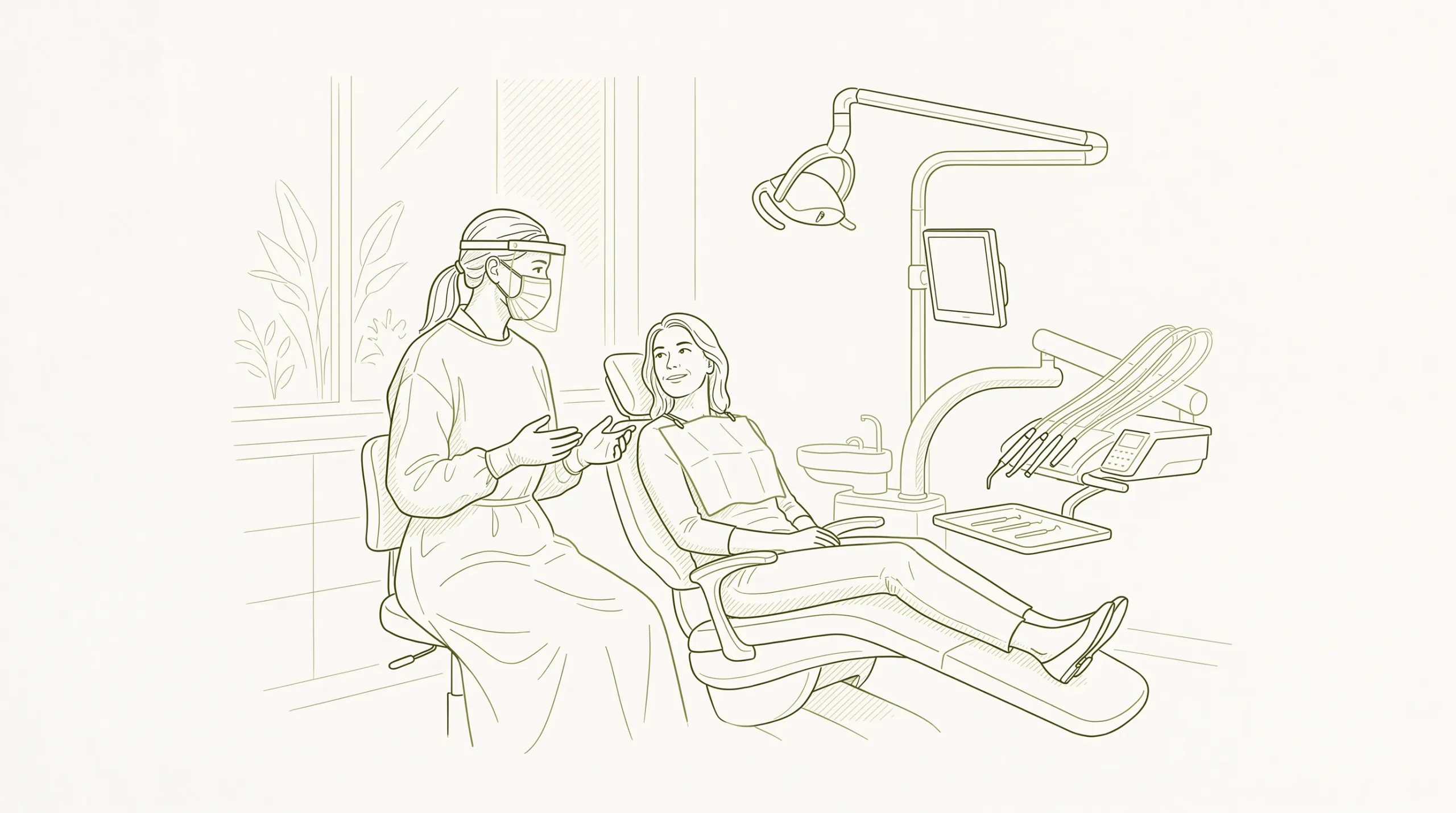
Ask how the clinic supports nervous or sensory-sensitive patients
Many people delay dental visits because of anxiety, previous experiences, sensory discomfort, gag reflex concerns or fear of judgement. A supportive clinic should respond with practical planning rather than pressure.
A dental care centre is easier to return to when the team explains what will happen, checks your preferences and allows time for questions. Depending on your needs, this may include discussing shorter appointments, breaks during treatment, local anaesthetic, sedation options or ways to reduce sensory triggers such as noise, taste or bright light.
Some people also manage health conditions that affect planning, attention or sensory load. For example, adults who relate to resources about how ADHD can present differently in women may find it useful to ask for written instructions, clear appointment reminders or step-by-step explanations. This is not a dental diagnosis, but it is a reminder that dental care can be easier when communication is adapted to the person in front of the clinician.
Sedation options require careful assessment. Suitability can depend on your medical history, medications, the type of treatment, fasting requirements and whether you need someone to accompany you. Your dentist can explain the potential benefits, risks and alternatives before any decision is made.
Make sure fees, payment plans and specials are explained properly
Dental fees can vary because treatment needs vary. A small filling, a crown, clear aligner treatment, tooth removal or cosmetic procedure all involve different materials, appointment time and clinical considerations. Before starting non-urgent treatment, you should be able to review what is being recommended and what it may cost.
A dental care centre should be willing to provide an itemised treatment plan where appropriate. This helps you understand the proposed stages of care, what is urgent and what can be planned over time. If payment plans or special offers are available, ask what is included, what is excluded and whether there are eligibility requirements or time limits.
It is also reasonable to ask about health fund item numbers, expected out-of-pocket costs and what may happen if the treatment plan changes after the dentist begins care. Dental treatment can sometimes uncover issues that were not fully visible beforehand, so the process for discussing changes should be clear.
Check safety, hygiene and professional standards
In Australia, dental practitioners must be registered and comply with professional obligations, infection control requirements and advertising rules. You do not need to know every regulation, but you can look for signs that the clinic takes clinical standards seriously.
This includes a clean treatment environment, appropriate use of gloves, masks and protective eyewear during care, clear consent discussions and careful review of your medical history. You can also ask who will provide your treatment, what their role is and whether referral is recommended for more complex needs.
Good consent is more than signing a form. It means you understand the nature of the treatment, the likely benefits, relevant risks, reasonable alternatives and the likely consequences of not proceeding. Your dentist should also give you time to consider significant or elective treatment, especially when the treatment is cosmetic or involves several appointments.
Think about location, access and continuity of care
Convenience matters because dental care is easier to maintain when appointments fit into your life. If you live or work near Robina, Varsity Lakes, Mermaid Waters, Burleigh Waters, Merrimac or Broadbeach Waters, a local clinic may make routine check-ups, follow-up visits and staged treatment simpler to manage.
Choosing a dental care centre close to home or work can also help if you need review appointments after treatment. For example, after an extraction, crown preparation, aligner review or sedation appointment, travel arrangements may need to be considered.
Continuity of care is another practical factor. It can be reassuring when your dentist and dental team understand your history, previous X-rays, treatment preferences and any concerns that make appointments more difficult. That does not mean you must stay with one clinic forever, but it can make planning more consistent.
Questions to ask before you book or begin treatment
If you are unsure how to compare clinics, bring your questions to the appointment. A suitable clinic should welcome reasonable questions and answer them in a way you understand.
Useful questions include:
- What are you assessing during my first appointment?
- What options may be available for my concern?
- What are the risks, limitations and alternatives?
- Which parts of treatment are urgent and which can be planned later?
- What will happen if I choose to monitor the issue for now?
- Can I receive an itemised treatment plan before proceeding?
- What comfort or sedation options may be suitable for me?
For a more detailed discussion, you may find these questions to ask a private dental clinic before treatment helpful when preparing for an appointment.
When should you arrange a dental appointment?
Routine check-ups are useful even when nothing hurts, because decay, gum inflammation and tooth wear can develop gradually. The right interval varies between patients, so your dentist can recommend a review schedule based on your risk factors.
You should consider arranging an assessment if you notice toothache, swelling, bleeding gums, a broken tooth, a loose adult tooth, persistent bad taste, jaw pain, sensitivity that does not settle or changes in your mouth that last more than two weeks. If symptoms are severe, worsening or linked with facial swelling, fever or difficulty swallowing, seek prompt professional advice.
For cosmetic concerns, an appointment can help determine whether treatment is suitable and whether oral health needs to be addressed first. Healthy gums, stable teeth and a balanced bite are often important before appearance-focused options are considered.
Frequently asked questions
What is the difference between a dentist and a dental care centre? A dentist is an individual registered health practitioner. A dental care centre is a clinic setting where one or more practitioners and support staff provide dental services. The services available vary between clinics, so it is worth checking what is offered and whether referral may be needed.
How do I know whether cosmetic dental treatment is suitable for me? Suitability depends on your oral health, tooth structure, gum health, bite, medical history, expectations and budget. A dentist can assess these factors and explain possible options, limitations, risks and maintenance needs.
Should I choose the clinic with the lowest advertised price? Cost is one factor, but it should not be the only one. Compare what is included, whether an examination is required first, the materials being used, follow-up needs, risks and whether you have received a clear treatment plan.
Can nervous patients ask about sedation before booking? Yes. If you feel anxious about dental treatment, you can ask what comfort and sedation options may be available. Suitability requires assessment, and your dentist should explain the relevant risks, preparation and alternatives.
Choosing a clinic in Robina
The right clinic should help you understand your oral health and make informed decisions without pressure. Look for careful assessment, clear explanations, preventive advice, transparent fees and a balanced discussion of benefits, risks and alternatives.
If you are looking for a dental care centre in Robina, you can contact The Dental Lounge @ Robina to arrange an assessment. A dental examination can help determine the cause of your concerns and which options may be appropriate for your individual circumstances.