

General and cosmetic dentistry are often discussed as if they are separate choices, but in practice they commonly overlap. For many patients, cosmetic general dentistry is not about choosing appearance over health. It is about assessing the teeth, gums, bite and oral habits first, then considering changes to colour, shape, alignment or missing teeth in a way that supports function as well as appearance.
If you are weighing up treatment in Robina or elsewhere on the Gold Coast, the most useful starting point is a dental examination. Your dentist can identify active problems, explain options and help you understand which treatments may be suitable for your goals and oral health. A staged plan is often more considered than focusing on appearance alone.
What cosmetic general dentistry really means
General dentistry focuses on the health, comfort and function of your mouth. This can include examinations, cleans, fillings, gum care, tooth pain management, preventive advice, oral surgery and treatment planning. It is the foundation that helps your dentist understand what is happening below the surface.
Cosmetic dentistry focuses on the appearance of teeth and smiles, including colour, shape, size, spacing and alignment. Treatments may include whitening, composite bonding, veneers, crowns, orthodontic options such as clear aligners and replacing missing teeth where appearance is one of the concerns.
Cosmetic general dentistry brings these two areas together. A tooth may need a filling because of decay, but the material and shape of that filling can also affect how the tooth looks. A missing tooth may affect chewing and speech, while also changing the appearance of the smile. Crooked teeth may be an appearance concern, but they may also influence cleaning, bite comfort and wear patterns.
The key point is that appearance-focused care should still be planned around oral health. Not every person needs cosmetic treatment, and not every cosmetic option is suitable for every mouth.
Why oral health usually comes first
Before changing the appearance of teeth, your dentist will usually check for issues that could affect treatment safety, comfort or longevity. This may include decay, gum inflammation, cracked teeth, grinding, jaw discomfort, existing restorations, oral hygiene habits and medical history.
For example, whitening teeth while decay or gum irritation is present may increase discomfort or delay more important care. Placing a veneer or crown on a tooth with an unresolved crack, infection or bite problem may not address the underlying cause of damage. Straightening teeth may require good gum health and careful monitoring.
The Australian Dental Association provides patient information through Teeth.org.au, including guidance on preventive care, brushing, flossing and regular dental visits. Those basics matter because they often influence whether a cosmetic option is appropriate and how well a result may be maintained.
A general dental assessment can also help you understand whether a concern is mainly cosmetic, functional or both. A dark tooth, for instance, may be related to staining, an old restoration, previous trauma or changes within the tooth. Each cause may lead to different treatment options.
Where general and cosmetic dentistry overlap
Many common dental concerns have both a health component and an appearance component. The table below shows how these areas can connect.
| Patient concern | General dentistry focus | Cosmetic consideration |
|---|---|---|
| Old or broken fillings | Check for decay, cracks, leakage and remaining tooth strength | Choose a restoration shade and shape that blends with surrounding teeth where suitable |
| Worn or chipped teeth | Assess grinding, bite pressure and tooth structure | Restore shape or edges in a way that looks natural for the individual mouth |
| Crooked or crowded teeth | Review bite, cleaning access, gum health and tooth movement risks | Consider alignment changes that may also affect smile appearance |
| Missing teeth | Assess chewing function, bone, gums and adjacent teeth | Discuss how replacement options may look when speaking or smiling |
| Tooth discolouration | Identify whether stains are external or internal | Consider whitening or restorative options if appropriate |
| Uneven gum or tooth proportions | Check gum health and tooth position | Discuss whether reshaping or restorative treatment may be suitable |
This overlap is why treatment planning matters. A single appointment may begin with a concern about appearance, but the recommended pathway may include general dental care first.
Common examples of combined care
A very common example is a tooth-coloured filling. The main reason for a filling may be to repair decay or replace a damaged restoration, but the shade, contour and polish can also affect how the tooth looks. Some patients ask about replacing older metal fillings with tooth-coloured fillings, particularly if the fillings are visible when speaking or smiling. Suitability depends on the condition of the tooth, the size of the restoration and the bite forces on that area.
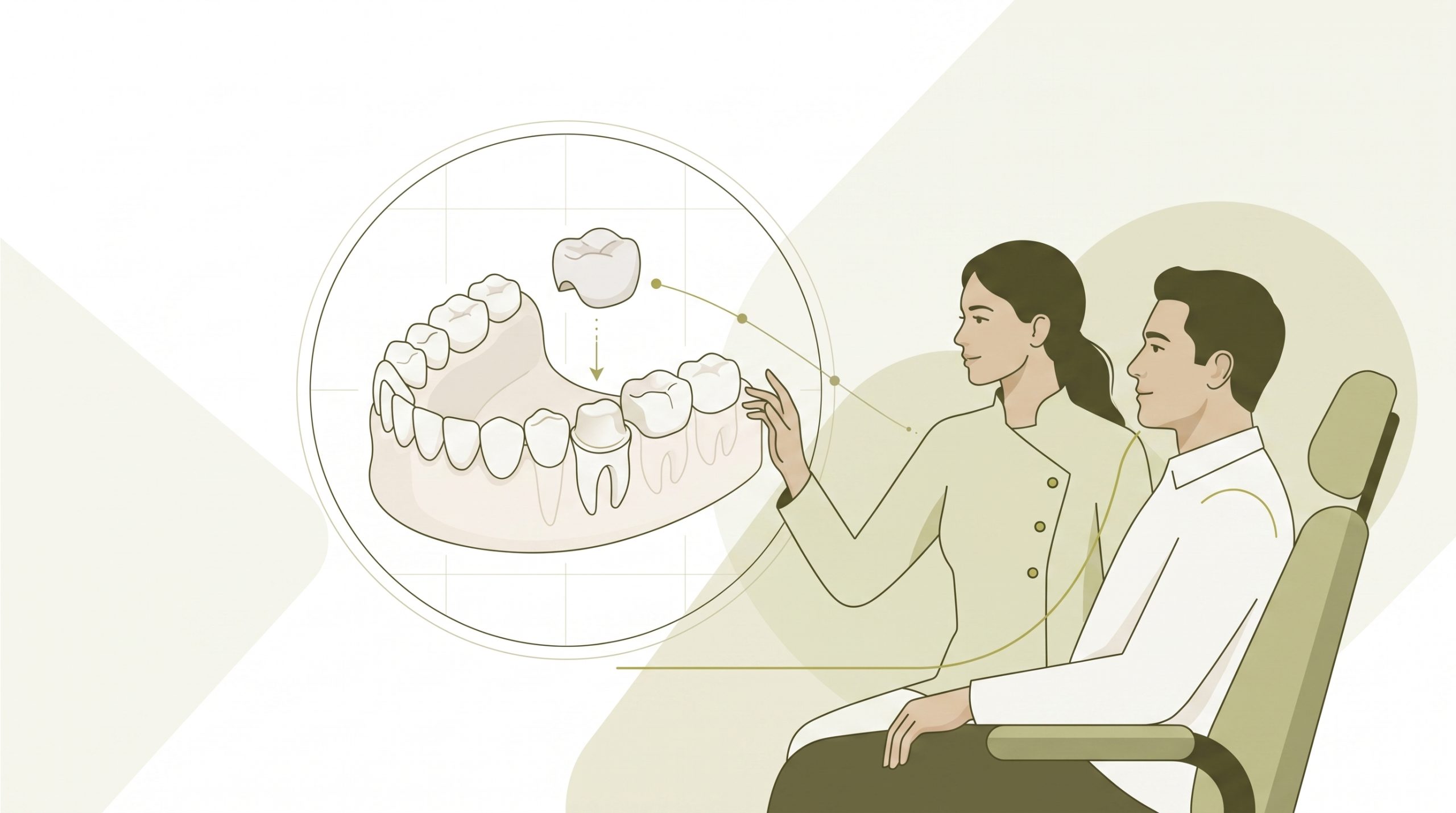
Crowns can also sit between general and cosmetic dentistry. A crown is a covering placed over a prepared tooth, often considered when a tooth has lost significant structure. It may help protect the remaining tooth and restore shape, but it also needs to be planned with colour, bite and gum position in mind. Crowns involve irreversible tooth preparation, so your dentist should explain the potential benefits, limitations, risks and alternatives.
Replacing a missing tooth is another area where function and appearance often overlap. A gap may affect chewing, the way neighbouring teeth move, speech or appearance, depending on its location and the individual mouth. Possible options may include a bridge, denture or implant-based treatment, if suitable. If this is a concern for you, The Dental Lounge @ Robina has information about options for replacing missing teeth that can help you understand the broad choices before an examination.
Orthodontic treatment, including clear aligner options such as Invisalign, may be considered for some people with crowding, spacing or bite concerns. Alignment can change how teeth look, but the planning should also consider gum health, tooth movement limits, retention and the stability of the result. Treatment experiences and timelines vary between patients.
Whitening is more appearance-focused, but it still benefits from a general dental check first. Whitening does not change the colour of fillings, crowns or veneers, and it may not be suitable for every type of discolouration. Some people experience temporary sensitivity or gum irritation, so it is worth discussing whether whitening is appropriate and what to expect.
What a combined appointment may involve
A combined general and cosmetic consultation is usually about gathering information before making decisions. Your dentist may ask what concerns you, what you would like to understand, and whether there are symptoms such as sensitivity, pain, bleeding gums, jaw discomfort or tooth grinding.
A visit may include:
- Discussion of your concerns and goals: This helps separate health issues, appearance preferences and practical factors such as timing, budget or previous dental experiences.
- Clinical examination: Your dentist checks teeth, gums, bite, existing fillings, signs of wear and any areas that may need closer review.
- Dental X-rays or scans if needed: These may help identify decay, bone levels, tooth roots, impacted teeth or issues not visible during a visual examination.
- Explanation of treatment options: Your dentist can outline possible choices, including doing nothing for the time being where that is appropriate, preventive care, restorative treatment, orthodontic options or cosmetic treatment.
- A staged treatment plan: If treatment is suitable, the plan may prioritise urgent or health-related concerns before appearance-focused work.
This process should give you time to ask questions. You should understand why a treatment is recommended, what alternatives exist, what risks may apply, what maintenance may be needed and what costs are involved before deciding.
Benefits, limits and risks to weigh up
When general and cosmetic dentistry are planned together, treatment can be more balanced. Your dentist is not only looking at how teeth may appear at the end of treatment, but also at the health of the supporting structures, the way teeth meet, how restorations may wear and how easy the result may be to maintain.
Possible benefits can include improving the shape, colour or alignment of teeth while also addressing decay, damaged restorations, tooth wear or missing teeth. However, outcomes vary. Materials can chip, stain or wear over time. Teeth can move after orthodontic treatment if retainers are not worn as advised. Whitening may not achieve the shade a person hopes for, and restorations may need maintenance or replacement in the future.
Some cosmetic procedures involve removing natural tooth structure. Veneers and crowns, for example, may require tooth preparation. This is why conservative options, such as polishing, whitening, bonding or no active treatment, may be discussed depending on your situation. A clinical assessment is needed to understand what is reasonable for your teeth.
Clear communication is important because dental treatment decisions are personal. Clear, tailored information also matters across other professional services. For example, people seeking client-focused legal services generally need advice that reflects their circumstances rather than a generic answer. Dental decisions are similar in that suitability depends on your oral health, medical history, anatomy, goals and preferences.
Choosing options without overlooking the basics
If you are considering cosmetic treatment, it can help to start with a simple question: what is the main thing I want to understand or improve? It might be colour, crowding, a chipped tooth, a gap, old restorations or missing teeth. From there, your dentist can explain whether the concern is mostly cosmetic, health-related or a combination of both.
It is also useful to think about maintenance. Some options may require more ongoing care than others. Your diet, brushing and flossing routine, grinding habits, smoking status, medical conditions and attendance for check-ups can all influence the suitability of treatment.
If you are still comparing options, this guide to choosing a cosmetic dental treatment that suits you may help you think through concerns, lifestyle and longer term planning before discussing options with a dentist.
For people who feel nervous about dental visits, it is reasonable to mention this early. The Dental Lounge @ Robina offers sedation options, and your dentist can discuss whether they may be appropriate for your health, anxiety level and the type of treatment being considered.
Local care in Robina and the Gold Coast
For patients in Robina, Varsity Lakes, Mermaid Waters, Burleigh Waters, Merrimac, Broadbeach Waters and nearby Gold Coast suburbs, local access can make staged dental treatment easier to plan. Some care may be completed in one visit, while other treatment may require review appointments, scans, impressions, laboratory work or healing time.
The Dental Lounge @ Robina provides general, cosmetic, orthodontic, oral surgery and sedation dentistry services in a modern dental setting. If payment timing is a concern, you can ask the team about available payment plans or current specials and whether they apply to the type of care being discussed.
The most appropriate plan is not always the most cosmetic option or the most involved option. Sometimes preventive care and monitoring are enough. Sometimes a small restoration is more suitable than a larger procedure. In other cases, staged care may give you time to address health concerns first, then consider appearance-focused changes later.
Frequently asked questions
Is cosmetic general dentistry the same as cosmetic dentistry? Not exactly. Cosmetic dentistry focuses mainly on appearance, while cosmetic general dentistry considers appearance alongside oral health, function, prevention and long-term maintenance.
Do I need healthy teeth before whitening, veneers or aligners? Your dentist will usually check for decay, gum inflammation, tooth cracks and other concerns first. Some issues may need treatment before appearance-focused options are considered.
Can general dentistry improve how my teeth look? In some cases, yes. Replacing a broken filling, repairing a chipped tooth, treating decay or replacing a missing tooth may also improve appearance. The main goal will depend on your individual situation.
Are cosmetic dental treatments suitable for everyone? No. Suitability depends on factors such as oral health, gum condition, tooth structure, bite, medical history, expectations and maintenance. A dental examination is needed before a treatment can be recommended.
What if I only want a small change? Small changes may still need careful assessment. Depending on the concern, options might include polishing, whitening, bonding, replacing an old filling, orthodontic advice or no treatment at that time.
Do cosmetic dental procedures have risks? Yes. All dental procedures carry potential risks and benefits. These vary by treatment and by patient, so your dentist should explain possible complications, alternatives and maintenance before you decide.
Thinking about your options in Robina?
If you are considering treatment that involves both oral health and appearance, a dental examination can help clarify what is happening and which options may be appropriate. To discuss your concerns, you can arrange an appointment with The Dental Lounge @ Robina and speak with the team about your needs, risks, alternatives and next steps.